Why the Loss of Daichi Kamada Should Not Be Taken Lightly at Crystal Palace
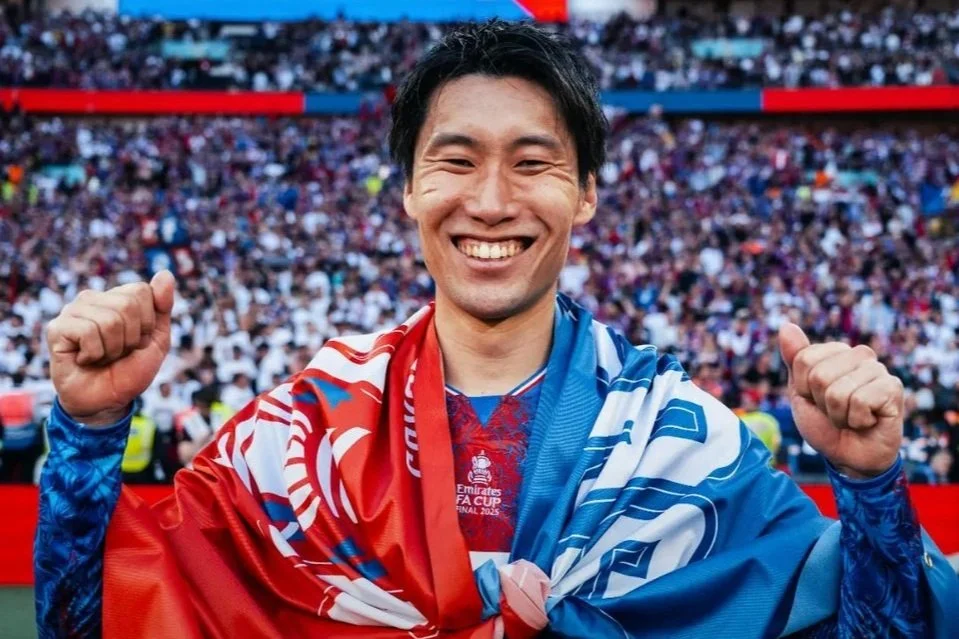
The Japanese midfielder looks set to leave Crystal Palace as a free agent at the end of the 25/26 season alongside his manager, Oliver Glasner. On the face of it, losing a 29-year-old free-agent signing who earns the highest wages at the club (£105,000 p/w) seems reasonable, as some may argue that finances could be better reinvested elsewhere. However, his influence during his two years at the club has perhaps gone under the radar and should not be underestimated.
Kamada had previously played a key role under Glasner at Eintracht Frankfurt, winning the Europa League, and was tipped to thrive yet again in the Austrians 3-4-2-1 system. However, the Japanese star had a shaky start to his debut season in the Premier League, as he was tasked with filling the gaping void of now Bayern Munich player Michael Olise. Olise, who had operated as a right-sided attacking midfielder, was part of a formidable attacking trio alongside Eberechi Eze and Jean-Phillipe Mateta, registering 10 goals and 6 assists in just 14 starts during the 23/24 campaign. Kamada, in comparison, registered no goals or assists when he started in the same position. Furthermore, whilst Olise drew 43 fouls across the season, Kamada drew a mere 10 whilst playing in that right attacking role. The change from a game-changing, skilful winger who represented what many would argue as a Crystal Palace DNA, to a more system-based, modest midfielder led to Palace fans growing frustrated with Kamada.
So why did Kamada struggle initially whilst deployed as a right-sided attacking midfielder? Firstly, the average positions taken up on the pitch in comparison to Olise are different, even in the same system. Whilst Olise can be seen to take a wider position on the pitch and drive inside with the ball, Kamada preferred to begin centrally. This can be attributed to the two players wildly different style of plays. For Palace fans to expect Kamada to replicate Olise was foolish, as Kamada prefers quick, one touch football to draw men in, whilst Olise preferred to beat his man before delivering a cross or a shot. Kamada’s positioning in central areas caused issues in his relationship on the pitch with Daniel Munoz, who was known for bombing down the right side by overlapping Michael Olise. As Munoz started high, Olise’s tendency to float inside with the ball allowed an abundance of space for Munoz to overlap into as Olise took defenders with him into the centre of the field. However, As Kamada started centrally, it was more of a struggle for Munoz to find space as the defenders had not left the space he looked to attack. Furthermore, without Munoz’s run to confuse defenders, Kamada was left crowded out in the middle, leaving less space for his creative excellence to shine as it did in Frankfurt. During Kamada’s time at Frankfurt, he operated on the left-hand side, where he could come inside onto his preferred right foot. This allowed Kostic to drive forwards, similarly to Munoz, whilst Kamada took defenders with him.
Secondly, the intensity of the Premier League plays a massive part in Kamada’s initial struggle. In the Bundesliga, Kamada had more space and time to drive forwards, and his skillset of half-turns and quick passes could exploit defences in a vertical, direct Glasner system. In the Premier League, defences are more compact and organised, with much less turnovers in quick succession. This meant Kamada was asked to be more physical and precise in tighter situations, and whilst Kamada excelled in tight situations at Frankfurt, the Premier League’s rigid, dominant defences played a big part in Kamada’s initial struggle. With only 4.82 duels won p/90 compared to Olise’s 7.69, Kamada can be seen to have needed time to adapt to English football. Eventually, Ismaila Sarr, an experienced Premier League player, took his place on the right-hand side, as Glasner opted for speed and physical ball carrying in the half-space.
However, Kamada’s season took a turn when he begun to play in the double pivot, primarily next to Adam Wharton. Despite being a somewhat lightweight midfield profile, both players are astute at evading press and progressing passes, which allowed this midfield pairing to be crucial in Crystal Palace’s FA Cup winning run.
Kamada sets up primarily on the left-hand side of the double pivot, as Glasner prefers to have both his midfielders quickly sweep the ball to the striker’s feet with their stronger foot. Kamada’s role looks simple but is overlooked by many Crystal Palace fans. His game intelligence fits Glasner’s system perfectly, as he often goes wide to the left to receive the ball, before recycling possession or splitting the opposition midfield lines. His role to draw opponents wide and use his technical ability to break the press, either through ball retention or recycled passes, allows for a quick opening of space for players like Wharton to then find the killer pass. By being so quick at first time passes and constantly finding pockets of space in the midfield, he allows the rest of the squad to thrive in the spaces he creates. Whilst Will Hughes, his understudy, can play a similar role, Kamada has more intelligence in finding the pockets that constantly free him up for receiving passes.
We can see clear examples of Kamada’s build up and spatial awareness even in just the first 20 minutes of the FA Cup final victory over Man City.
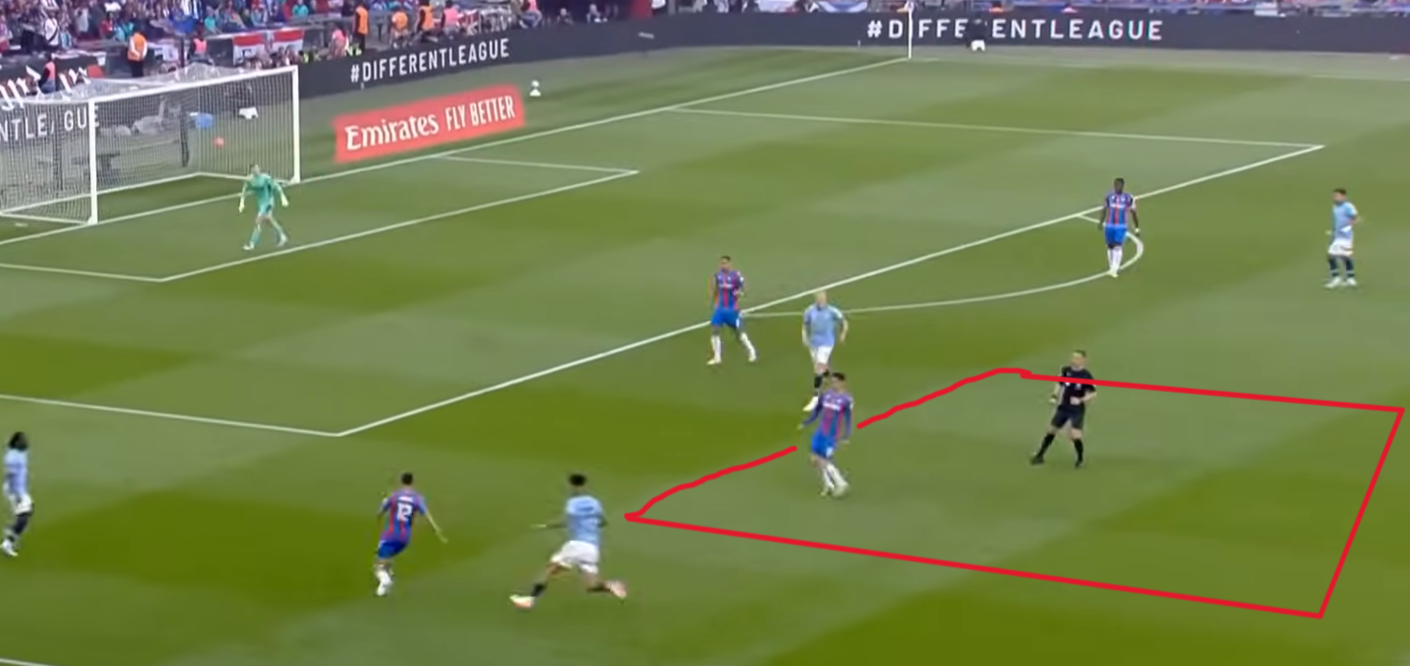
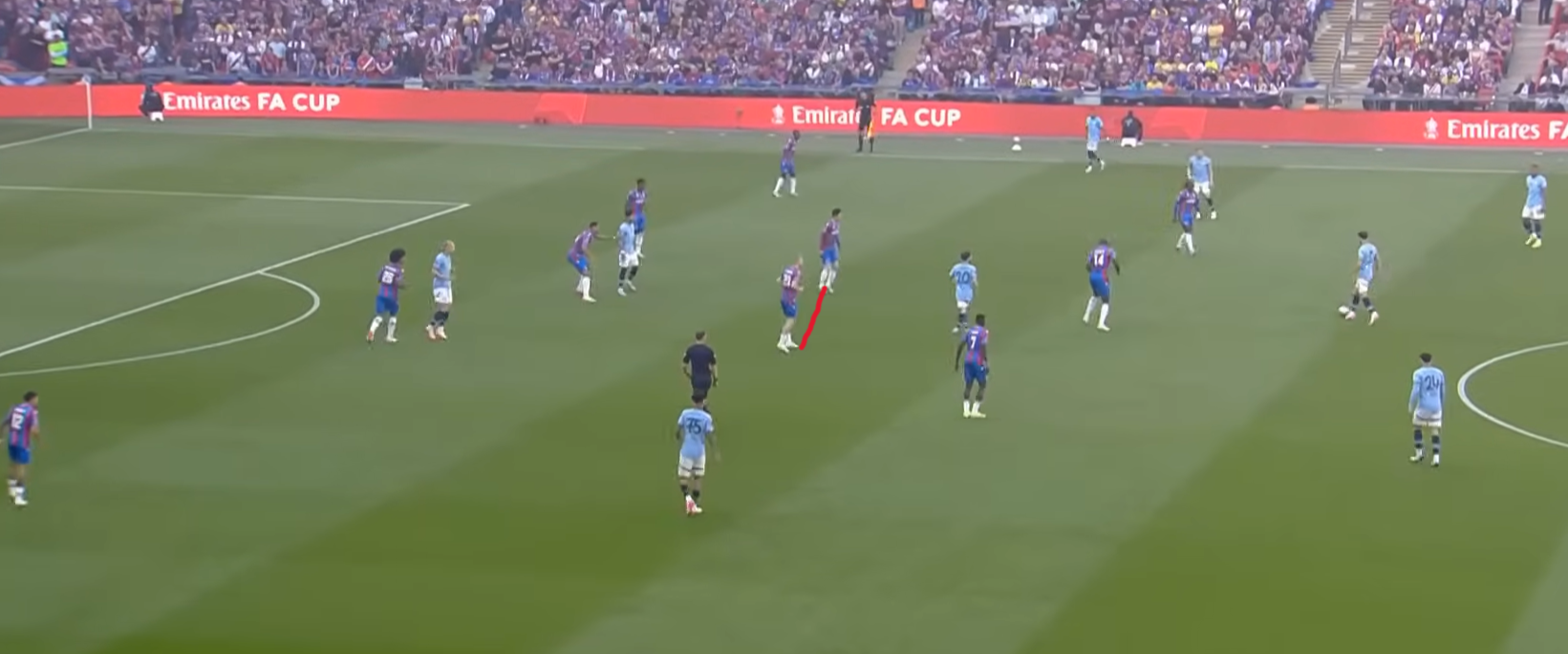
Figure 1: Daichi Kamada receiving the ball from Daniel Munoz in the defensive third, with space marked in red.
Here, Crystal Palace win the ball back deep in their defensive third and are looking to play out of Guardiola’s aggressive counter press. Munoz (RWB) is facing towards his own goal, but Kamada can find a large pocket of space (as seen in the Figure 1). By being able to find this space, Kamada gives himself time to think about where and when to play a pass forward to progress his team.
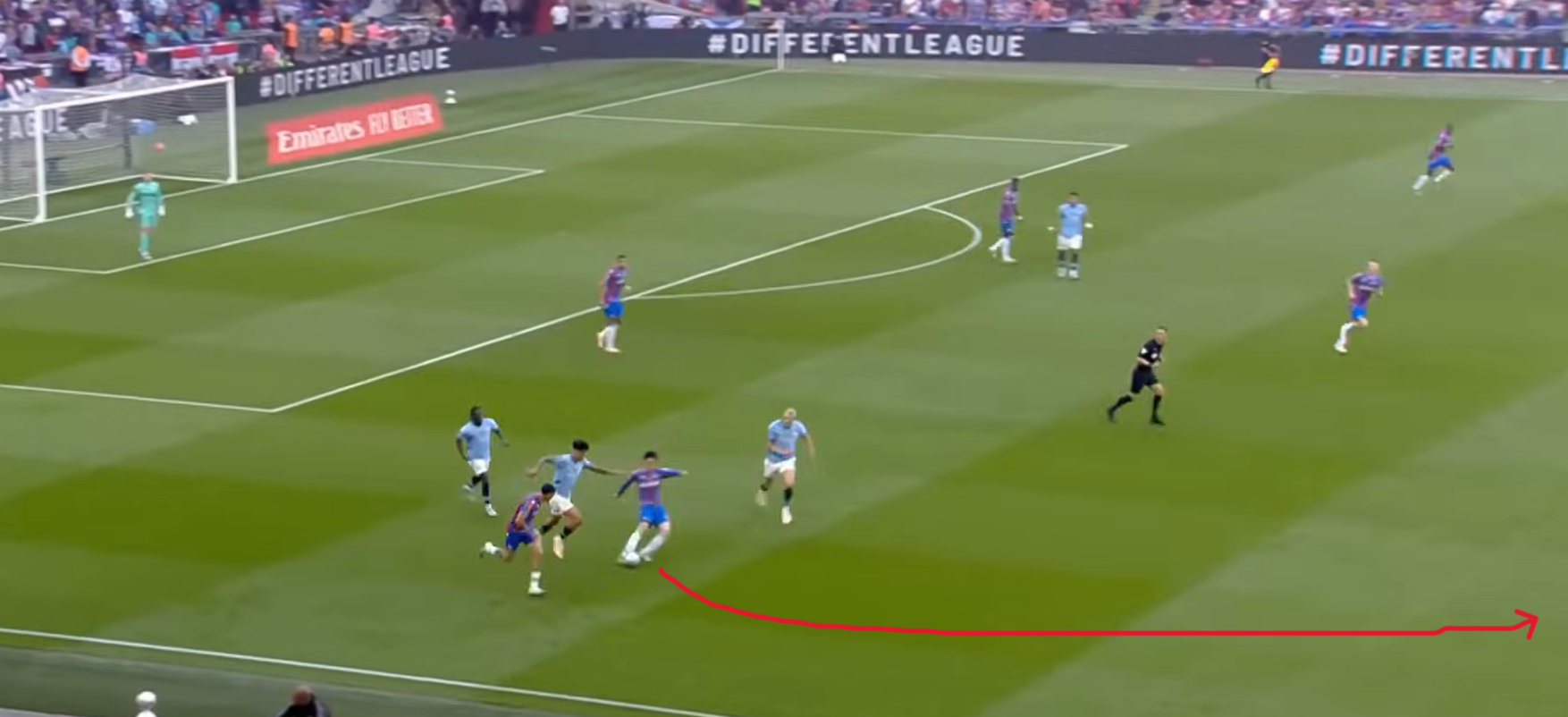
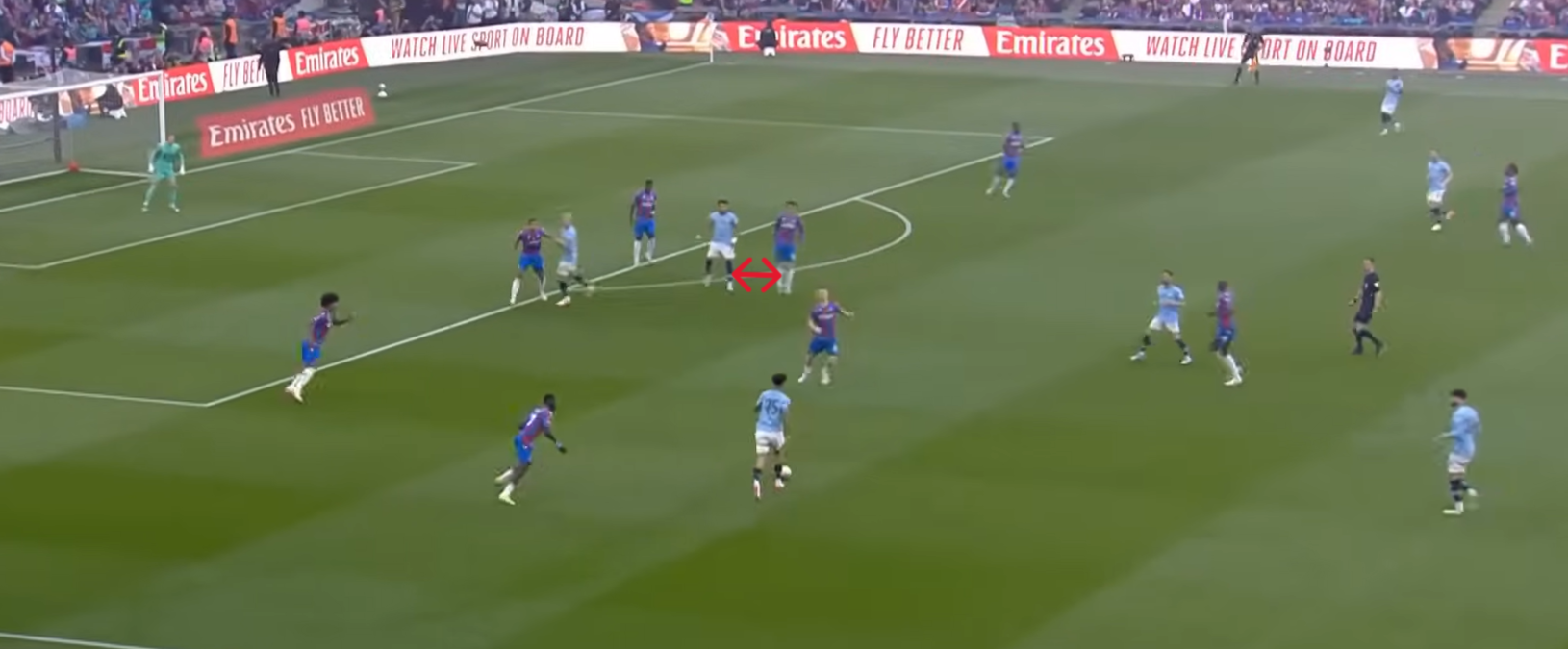
Figure 2 : Kamada playing a pass into the channel.
As seen in Figure 2, he takes one touch onto his preferred right foot, then swings the ball into the channel where Mateta (CF) is making the run. In just two touches, Kamada was able to progress the team from his own third to the Man City half, bypassing their counter press and their midfield. The space he created for himself allowed him to be efficient and progressive in just two touches.
We can also see Kamada’s quick play in the build up to the only goal of the match.
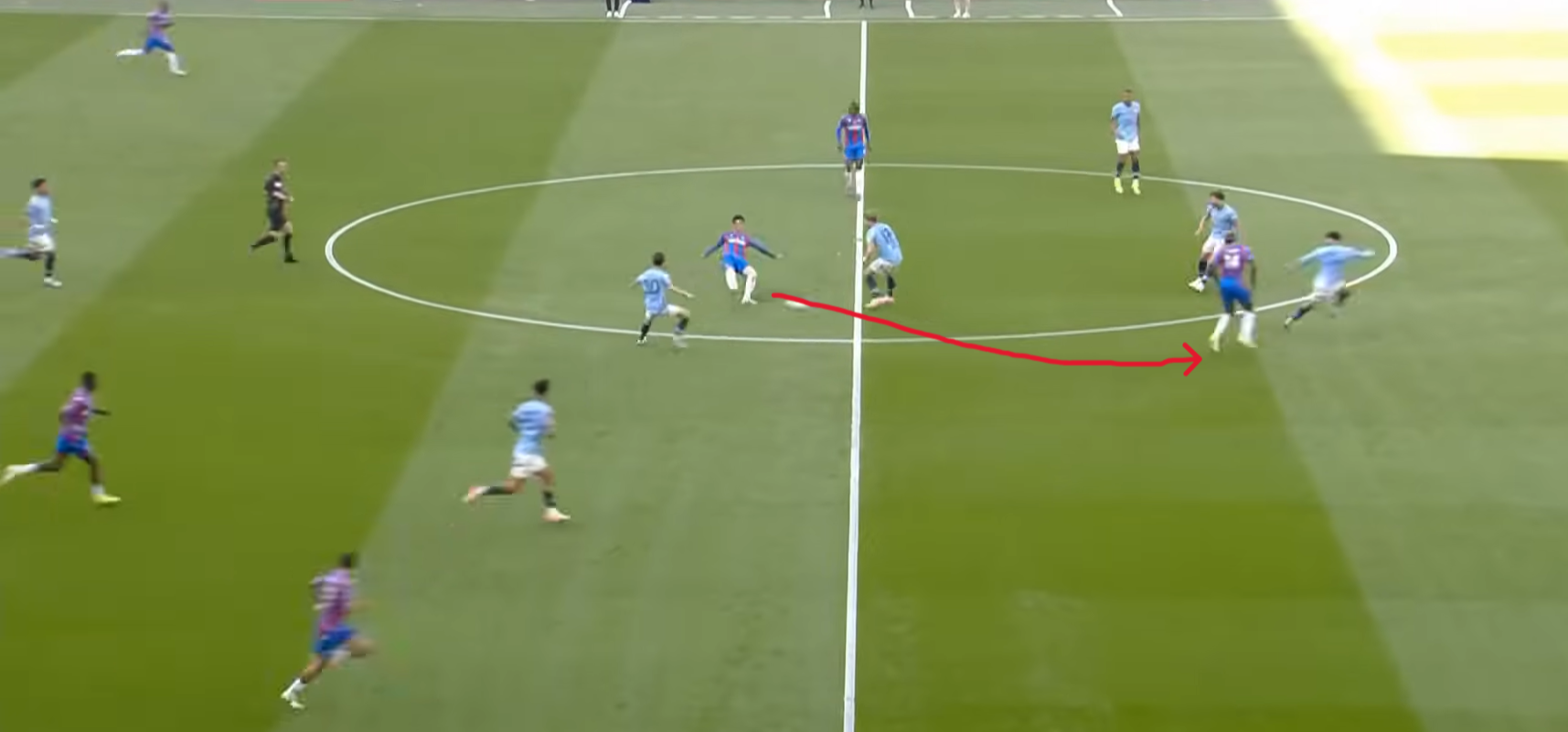
Figure 3: Kamada playing a first-time pass in the build up to Eze’s goal.
With Man City pressing so high, Richards (RCB) goes direct to Mateta shortly after the goal kick, and Mateta holds off Gvardiol before laying the ball off to Kamada. Kamada had found space to receive the ball behind Bernardo Silva and Kevin De Bruyne, before playing a first time pass back to Mateta to allow Mateta to turn and taking the two Man City midfielders out of the game in the process. The transition from box to box for the goal was extremely efficient and would not have been possible without Kamada’s ability to play quick and in space.
Kamada’s high spatial awareness also allows him to keep defensive structure.
In just the first 3 minutes of the final, Crystal Palace already had set up in a low block, with 11 men behind the ball. Kamada and Wharton can be seen to be very tight together (Figure 4), as Man City prefer to find their creative players in pockets between the midfield and the defence. By being so close together, Kamada and Wharton can press Bernardo Silva (No. 20 Man City) if he were to receive the ball, whilst also cutting off any passing lanes to Marmoush and Haaland (LCF and RCF Man City). With Kamada staying disciplined in zonally marking Marmoush (Figure 5), the Egyptian was limited to just 22 touches, with only 4 in the opposition box and 0 successful dribbles. The Egyptian was frozen out of the game, barely having an impact for Man City.
Whilst Palace are more prone to facing higher presses and mid blocks, the Conference League has led to Palace being frustrated by defensive opposition. When facing a lower block, Kamada has been key.
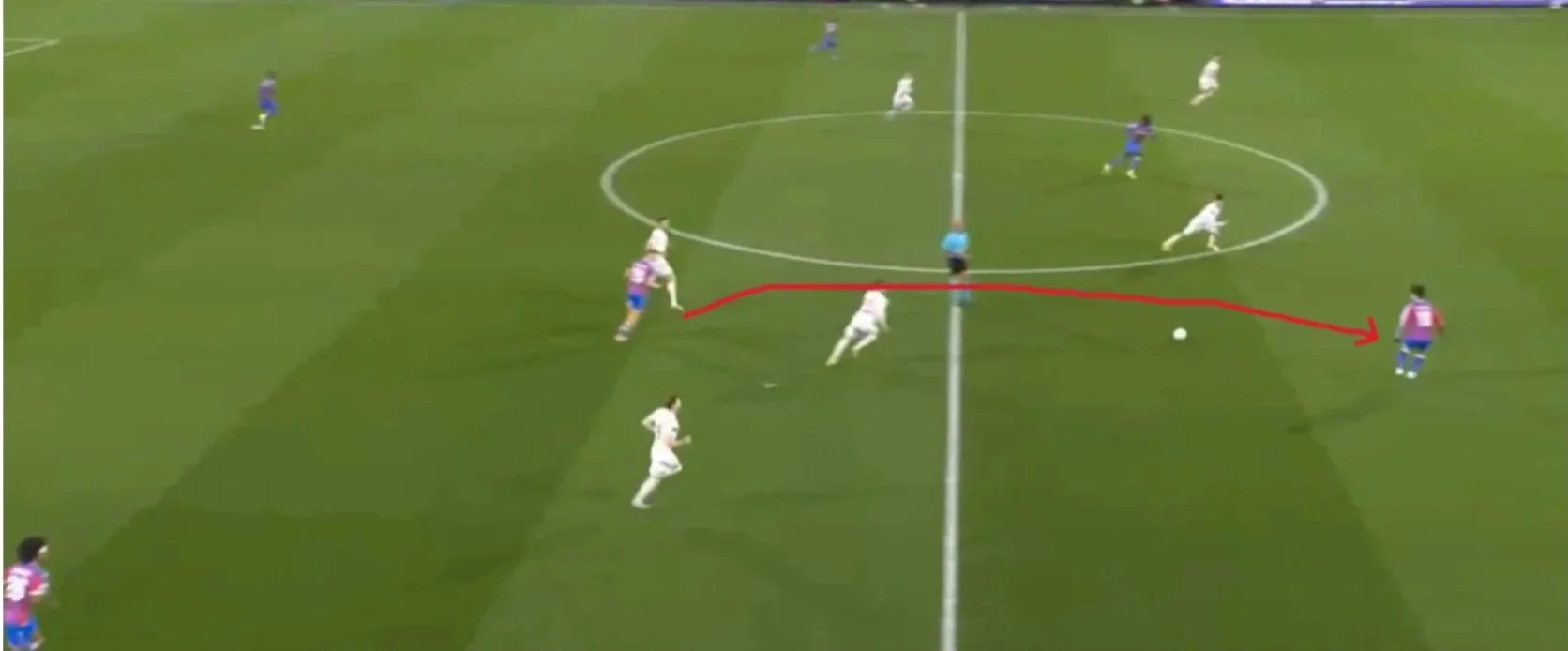
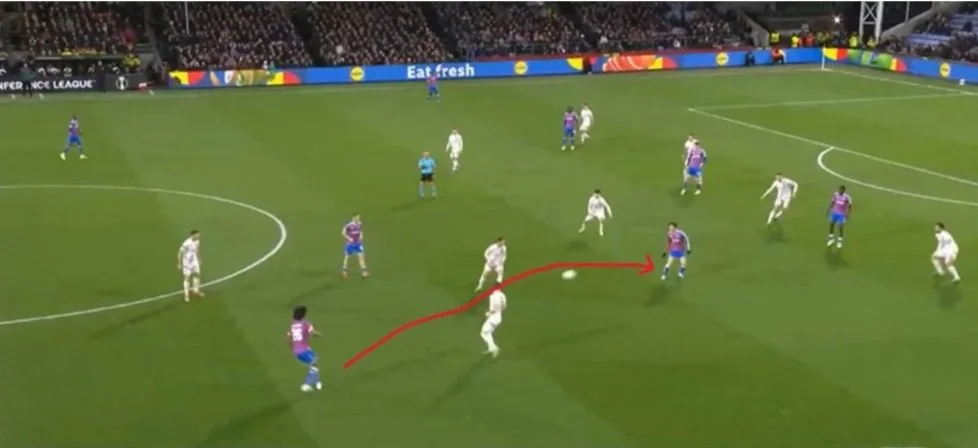
In the match against HŠK Zrinjski Mostar at Selhurst Park, Kamada vacated his place horizontal to Wharton, and instead picked up a space in between Wharton and the forward players. Wharton’s ability to play first time through lines allowed Kamada to be free in pockets of play just behind the frontline that allowed him to find either a killer pass or a shooting angle. In Figure 6, we can see Wharton play the pass through to Kamada behind the initial line of the Mostar block, removing 6 players from the game. From here, Kamada was able to find Strand Larsen (CF) in more space than he would have had if Wharton found the Norwegian directly, rather than through Kamada. Similarly, in Figure 7, as Mostar line up even deeper, Kamada again finds a pocket of space behind the second line of the Mostar low block, this time from Richards (RCB), where he turns and tries to pick out Sarr (RAM). His versatility in midfield allows Glasner to shift from a more rigid block, like in the FA Cup final, or to a more fluid system.
To match his adaptability, off the ball intelligence, technical ability, and defensive positioning, Crystal Palace will struggle to find a similar profile to that of Daichi Kamada. Whilst Glasner leaving at the end of the season may result in a change of system, Kamada’s capability to shift effortlessly between systems will be missed if Crystal Palace cannot find an adequate replacement. Similar players based on player profile include Brentford’s Mathias Jensen, who is technically similar on the ball, or Joao Gomes, who matches his off the ball and defensive capabilities. A more rogue, realistic replacement that Crystal Palace could eye up in the summer would be NEC Nijmegen’s Kodai Sano, who despite only being 22, is taking the Eredivisie by storm this season. A technically superb midfielder with off-the-ball intelligence, Sano could be the next Japanese star to grace South London.
While short, Kamada’s Crystal Palace career took a sharp turn, and will be remembered as a great success in the historic FA Cup winning campaign of 24/25. His importance in the team cannot be understated as his defensive contributions and intelligent play unlocks the likes of Adam Wharton to thrive at his best. Though a quiet figure, his assurance on the ball will be missed heavily. He will be hoping, no doubt, to finish his season on a high and add the Conference League to his cabinet before he leaves at the end of the 25/26 season.